

ADATA Launches UD230 And UD330 USB Flash Drives
 ADATA Technology, a leading manufacturer of high-performance DRAM modules, NAND Flash products, and mobile accessories today launched the UD230 and UD330 USB Flash drives. Featuring a capless, folding-cover design and a large lanyard hole for attaching to straps and keychains, they are easy-to-use and well-suited for on the go. The UD230 works in USB 2.0 and offers up to 64GB of storage, while the UD330 works in USB 3.1 and comes with up to 128GB storage. Both models are manufactured with the Chip-On-Board (COB) process, which allows them to be more compact in size and more resistant to impact, water, and dust. ADATA remains committed to its USB Flash drive global leadership role and will continue releasing new models as market needs evolve.
User-Friendly Folding-Cover Design and Lanyard Hole for Easy Carrying
Sporting a folding-cover design, the UD230 and UD330 remedy the universal dilemma of misplaced caps. The USB connector can be stored in the cover while not in use. This simple yet intuitive design helps make the UD230 and UD330 very satisfying to use on the go. In addition, both models come with a large lanyard hole for convenience and personalization, allowing users to attach them to lanyard straps or keychains for easy carrying.
 Patriot, a global leader in performance memory, SSDs, gaming peripherals and flash storage solutions today announced the immediate availability of its new series of microSD memory cards. Nowadays, just about every gadget is designed to use microSD memory cards from smartphones, tablets, action cams, DV cams to dash cams and even drones – they all use microSD cards for massive data storage and the option to upgrade by just replacing the card. Even some domestic surveillance cameras have started to record directly to microSD cards giving owners an easy way to archive footage as a raw data stream. Recording and storing high-quality video and photos depend on two things, speed and capacity and is why you must select the right microSD card for the job.
 The most beautiful memories deserve preservation with the highest video specifications! The high-speed memory cards microSDXC UHS-I U3 V30 and the microSDHC UHS-I U1 V10 launched by Apacer are equipped with multiple protections and high durability to ensure uninterrupted video recording in the harsh environments! Offered in a maximum capacity of 256GB, the V30 memory card complies with SD Association’s latest UHS Video Speed Class 30 (V30) standard, meaning it can record at a minimum speed of 30MB per second to support 4K Ultra HD and 3D video recording and high-speed continuous shooting. Available in 16GB and 32GB, the V10 memory card supports Full HD recording demand and is perfect for devices requiring prolonged recording, such as dash cams and sports cameras.
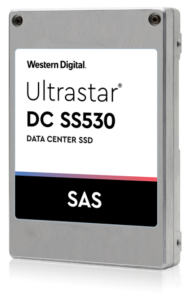 Western Digital Corporation, a data technology leader, today introduced the new Ultrastar DC SS530 SAS SSD, the company’s highest-density drive and the fastest dual-port SAS SSD in the market, enabling server and storage array manufacturers to offer customers substantially lower data center TCO for Fast Data applications. By doubling maximum capacity of the previous generation to 15.36TB within the same 2.5-inch 15-mm form factor, drive storage density also doubles, giving IT managers the potential to reduce the number of drives deployed, consolidate servers and open up valuable rack space for improved CapEx and OpEx costs.
 Toshiba Memory America, Inc. (TMA), the U.S.-based subsidiary of Toshiba Memory Corporation, today announced the development of a prototype sample of 96-layer BiCS FLASH, its proprietary three-dimensional (3D) flash memory, with 4-bit-per-cell (quad level cell, QLC) technology. With this milestone achievement, Toshiba demonstrates its technology leadership in the storage market by delivering technology that boosts single-chip memory capacity to the highest level yet achieved.
 Western Digital Corp. today announced successful development of its second-generation, four-bits-per-cell architecture for 3D NAND. Implemented for the company’s 96-layer BiCS4 device, the QLC technology delivers the industry’s highest 3D NAND storage capacity of 1.33 terabits (Tb) in a single chip. BiCS4 was developed at the joint venture flash manufacturing facility in Yokkaichi, Japan with our partner Toshiba Memory Corporation. It is sampling now and volume shipments are expected to commence this calendar year beginning with consumer products marketed under the SanDisk brand. The company expects to deploy BiCS4 in a wide variety of applications from retail to enterprise SSDs.


