
ADATA Launches XPG SX6000 PCIe Gen3x2 M.2 2280 SSD
ADATA Technology, a leading manufacturer of high performance DRAM modules and NAND Flash products, today launched the XPG SX6000 SSD. The product represents a bold move to provide PCI Express storage performance for nearly the same price to end users as that of traditional 2.5” SATA SSD. The SX6000 uses the compact M.2 form factor and reaches 1000MB/s read and 800MB/s write, easily doubling SATA SSD throughput without a relative increase in price. This is part of an ADATA focus on high speed, compact M.2 drives aimed at gamers, overclockers, and PC DIY enthusiasts. The SX6000 meets NVMe 1.2 specs and offers up to 1TB capacity, all at an approachable entry-level alongside its more premium stablemates the SX7000, SX8000, and SX9000.

Twice the speed without a need to spend significantly more
The leading advantage of the SX6000 is embodied in its superb cost-performance ratio. Using 3D TLC NAND, a Realtek controller, NVMe 1.2 technology, and a PCIe Gen3x2 interface, it reaches 1000MB/s read and 800MB/s write. Compared to a typical 500MB/s by 400MB/s on SATA III SSDs, this means doubled performance for less than 10% more spend in same-capacity comparisons. Increasingly, motherboards ship with two and four M.2 slots, up from a single slot on select boards just two years ago. Therefore, PCIe M.2 SSDs are expected to become more normative and the SX6000 encourages this trend as an affordable high speed alternative that works great as an OS drive and mass storage.


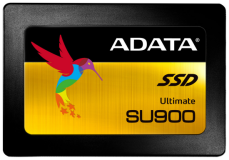 CDRLabs has taken an in depth look at ADATA's Ultimate SU900 SSD. Designed for use in everything from the lightest ultrabooks to high-end desktops, this performance-oriented drive is powered by Silicon Motion's SM2258 controller and is available with up to 2TB of 3D MLC NAND flash. The SU900 also utilizes intelligent SLC caching and a DRAM cache buffer to deliver up to 560 MB/s read and 525 MB/s write speeds. In addition, it features technologies like LDPC error correction, data shaping, wear leveling and a RAID Engine to provide high TBW and eliminate the vast majority of potential data errors.