
Blu-ray Disc Association Completes Ultra HD Blu-ray Specification
The Blu-ray Disc Association (BDA) today announced completion of the Ultra HD Blu-ray specification and released the new logo that will delineate Ultra HD Blu-ray products. The Ultra HD Blu-ray specification, which represents the work of global leaders from the consumer electronics, IT and content creation industries, will enable delivery of Ultra HD content via Ultra HD Blu-ray Disc to the rapidly growing number of UHD TV households.

“For years, Blu-ray Disc has set the standard for high definition picture and audio quality in the home. Ultra HD Blu-ray will do the same for UHD home entertainment," said Victor Matsuda, chair, BDA Promotions Committee. “The technical capabilities of Blu-ray Disc, in particular its significant storage capacity and high data transfer rates, will enable the delivery of an unparalleled, consistent and repeatable UHD experience."
Add a comment


 The need for media storage and transmission is increasing significantly, as multimedia data becomes more and more popular and large-capacity portable hard drives have now must-have products. Apacer always placed consumer needs as our main concern for product development, and has made another breakthrough after the release of the AC233 USB 3.0 portable hard drive by increasing the storage capacity and transmission speed of the portable hard drive, and released the all new ultra-high speed AC330 USB 3.0 portable hard drive that can store large amounts of multimedia data.
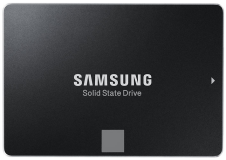 CDRLabs has taken yet another look at Samsung's popular 850 EVO Series SSD. This time around, we've reviewed the 1TB version of the drive which combines Samsung's MEX controller with their 3-bit 3D V-NAND. To compensate for the slow write speeds typically associated with 3-bit (TLC) NAND, the 850 EVO uses Samsung's TurboWrite write acceleration technology, which creates a high-performance write buffer in the SSD. It also offers support for Device Sleep (DEVSLP), hardware-based full disk encryption and Samsung's RAPID (Real-time Accelerated Processing of I/O Data) technology. By using free PC memory as a cache, RAPID can push the performance of the SSD beyond the limits of the current SATA specification.