

Toshiba Introduces EXCERIA Pro SD And EXCERIA microSD Memory Cards
 Toshiba’s Digital Products Division (DPD), a division of Toshiba America Information Systems, Inc., today introduced the Toshiba EXCERIA Pro SD Memory Card and Toshiba EXCERIA microSD Memory Card, two flash storage options equipped to unleash a device’s full shooting potential to capture stunning images and immersive footage.
Ideal for professional DSLR photographers and high action sports enthusiasts respectively, the EXCERIA Pro SD and EXCERIA microSD provide unparalleled performance with excellent read/write rates and ample storage to capture fast-action photos and 4K videos without delay.
“Recording the most important life moments shouldn't be limited by speed or space,” said Maciek Brzeski, Vice President of Branded Storage Products, Toshiba Digital Product Division. “With the EXCERIA Pro and EXCERIA microSD, Toshiba delivers a memory card that specifically complements consumers' professional and mobile lifestyles.”
Add a comment


 The need for media storage and transmission is increasing significantly, as multimedia data becomes more and more popular and large-capacity portable hard drives have now must-have products. Apacer always placed consumer needs as our main concern for product development, and has made another breakthrough after the release of the AC233 USB 3.0 portable hard drive by increasing the storage capacity and transmission speed of the portable hard drive, and released the all new ultra-high speed AC330 USB 3.0 portable hard drive that can store large amounts of multimedia data.
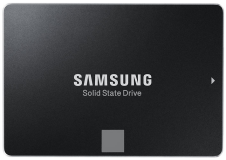 CDRLabs has taken yet another look at Samsung's popular 850 EVO Series SSD. This time around, we've reviewed the 1TB version of the drive which combines Samsung's MEX controller with their 3-bit 3D V-NAND. To compensate for the slow write speeds typically associated with 3-bit (TLC) NAND, the 850 EVO uses Samsung's TurboWrite write acceleration technology, which creates a high-performance write buffer in the SSD. It also offers support for Device Sleep (DEVSLP), hardware-based full disk encryption and Samsung's RAPID (Real-time Accelerated Processing of I/O Data) technology. By using free PC memory as a cache, RAPID can push the performance of the SSD beyond the limits of the current SATA specification.


