

OCZ Introduces Enterprise-Class Saber 1000 SSD Series
OCZ Storage Solutions -- a Toshiba Group Company and leading provider of high-performance solid-state drives (SSDs) for computing devices and systems, today announced its new enterprise-class Saber 1000 SSD Series designed for read-intensive applications targeting high-volume deployment hyperscale, web-hosting and distributed computing environments. The SATA-based Saber 1000 Series solves demanding key customer business challenges and supported by an enterprise-optimized feature-set, large storage capacities, and low total cost of ownership (TCO).

The new series leverages the latest A19nm NAND flash from Toshiba and is available in 240GB, 480GB and 960GB usable capacities. It utilizes OCZ’s internally developed Barefoot 3 controller and firmware which delivers consistent sustained I/O performance across all capacities to accelerate enterprise applications.
Add a comment

 Kingston Digital, Inc., the Flash memory affiliate of Kingston Technology Company, Inc., the independent world leader in memory products, today announced a powerful duo in storage with capacity upgrades to both Class 10 UHS-I microSD and Class 10 UHS-I SDHC/SDXC cards.
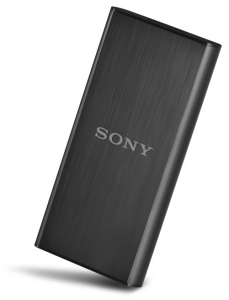 With the launch of the SL-BG1 and SL-BG2, Sony introduces a fast and safe, external storage space expansion for your mobile office – all in a pocket-friendly size. The SL-BG2 packs 256GB, whilst the SL-BG1 has 128GB of storage space, enough capacity especially for ultrabook users to save all important documents.
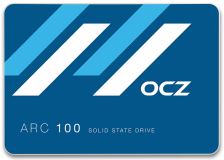 CDRLabs kicks off the week with a review of OCZ's ARC 100 solid state drive. Developed to deliver exceptional performance at an enticing price point, the ARC 100 is based on OCZ's Indilinx Barefoot 3 M10 controller. This cutting-edge controller is powered by both an ARM Cortex processor and OCZ's own Aragon co-processor and features an advanced, multi-level ECC engine, low write amplification, efficient garbage collection, and adaptive NAND flash management. The ARC 100 is also equipped with Toshiba's Advanced 19nm (A19) Toggle Mode MLC NAND flash and an extra large DRAM cache to deliver up to 490 MB/s read and 450 MB/s write speeds along with a maximum of 80,000 4KB random write IOPS.

