

G.SKILL Releases Extreme Performance Phoenix Blade Series 480GB PCIe SSD
G.SKILL International Co., Ltd., the leading high performance memory and SSD designer and manufacturer, is excited to announce the Phoenix Blade Series PCIe SSD, the next generation of high-speed, high-capacity storage device. The Phoenix Blade PCIe SSD is the perfect storage solution for extreme gaming, professional graphic design, industrial design, and HD video & audio content creation.
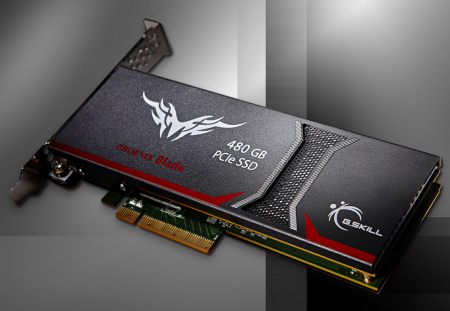
By introducing extreme read and write performance, the potential of today’s multi-core processors can be unleashed, resulting in higher productivity and performance, whether you are in extreme gaming or professional design.
Add a comment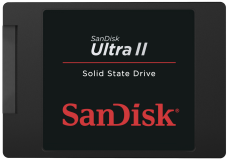 Today, CDRLabs brings you a review of SanDisk's new Ultra II solid state drive. This easy, affordable upgrade solution is available in capacities ranging from 120GB up to a 960GB, and, depending on the capacity, is powered by one of two controllers from Marvell. The Ultra II is also the first SSD from SanDisk to use TLC NAND flash. To overcome the challenges typically associated with this type of NAND, the drive is equipped with SanDisk's new nCache 2.0 technology which utilizes a two-tiered caching architecture to optimize drive speed and endurance.
 Samsung Electronics Co., Ltd., the world leader in advanced memory technology, today announced that it has begun mass producing the industry’s first 3-bit multi-level-cell (MLC) three-dimensional (3D) Vertical NAND (V-NAND) flash memory, for use in solid state drives (SSDs).
 CDRLabs has taken an in depth look at Crucial's MX100 SSD. This consumer-oriented drive offers powerful speeds and advanced features at a low cost per gigabyte. The MX100 combines Marvell's 88SS9189 controller with a custom firmware and Micron's new 16nm 128gb NAND to deliver up to 550MB/s read and 500MB/s write speeds. The MX100 also offers a long list of features including AES 256-bit encryption, thermal and power loss protection, TRIM support and active garbage collection. Additionally, it uses Native Write Acceleration to deliver consistent throughput by spreading the drive’s workload across several elements. It also employs technologies like Data Defense and Redundant Array of Independent NAND (RAIN) to increase security and protection of data to a level that’s rarely found in consumer-class SSDs.

