

Patriot Releases EP Pro microSDHC/SDXC 4K Capable Card
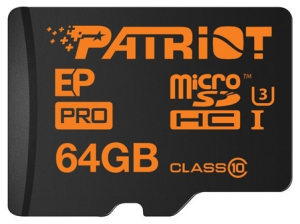 Patriot, a leading manufacturer of USB Flash, mobile accessories, computer memory and SSDs, announced the release of the latest addition to its 4K capable cards, the EP Pro microSDXC Class 10, UHS-I U3 card.
Compliant with the latest SD Association specifications for Class 10 UHS-I U3 cards, it is perfect for 4K recording. The Patriot EP Pro microSDXC Card reaches speeds of up to 95MB/s read and 80MB/s write. Capable of capturing a range of video and still images the EP Pro microSDXC can shoot video in Full HD, Ultra HD and 4K2K as well as capture continuous still image shooting in HD. Ideal for the extreme sports enthusiast, outdoorsmen and professional photographers the EP Pro microSDXC Card is the ideal choice for the latest action camera, Android smartphone or tablet.
“The EP Pro microSDXC Card will provide customers with the fastest in the industry performance for the abundance of 4K capable, UHD enabled multimedia devices available on the market” Said Meng J. Choo, Product Manager at Patriot. “Customers will now be able to unlock the potential of their top-shelf devices.”
Add a comment
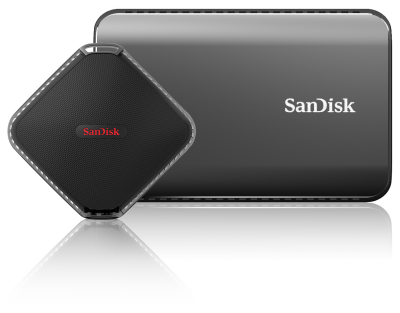
 SanDisk Corporation, a global leader in flash storage solutions, at Computex Taipei 2015 today announced its new CloudSpeed Eco Gen. II SATA SSD, a purpose-built storage device for cloud service providers with up to 2TB capacity. This new SSD is now sampling with select hyperscale customers. Based on 15nm NAND flash, the new CloudSpeed Eco Gen. II SSD delivers greater storage density with 3x the streaming bandwidth vs. hard disk drives (HDDs). Designed as a drop-in replacement for HDDs, CloudSpeed Eco Gen. II provides datacenters with a lower cost-per-square-foot for hyperscale applications such as analytics, media streaming and content repositories.