
AMD Expands Gaming Portfolio With New Radeon R7 Series Solid State Drives
AMD today announced a new technology partnership with OCZ Storage Solutions – A Toshiba Group Company, for AMD Radeon-branded Solid State Drives (SSDs). Starting today, users can purchase the AMD Radeon™ R7 Series SSDs in 120GB, 240GB or 480GB capacities from their favorite online retailers.
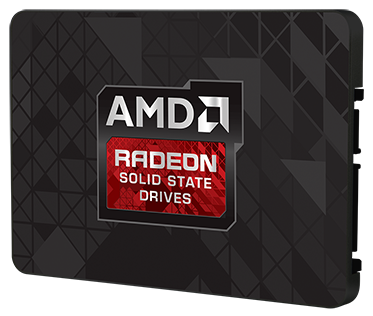
The AMD Radeon™ R7 Series SSDs are an excellent choice for gamers looking to upgrade their system’s overall responsiveness with an economical solution that puts performance and reliability front and center.
“The AMD Radeon™ brand is synonymous with performance and quality amongst PC gamers,” said Roman Kyrychynskyi, director of memory, AMD. “With the new AMD Radeon™ R7 Series SSDs powered by outstanding OCZ Storage Solutions IP, we bring that reputation to the SSD market with a series of drives that offer an ideal combination of performance, reliability and affordability—great for gamers building or upgrading a rig.”
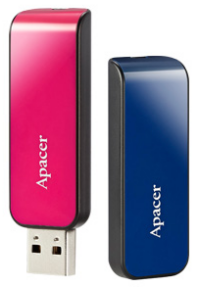 As the pioneer in digital storage, Apacer launches the latest AH334 “Galaxy Express” USB 2.0 flash drive. Inspiration by stylish bullet train, large capacity and high speed, AH334 captures every flash drive user, featuring two vivid colors: “starry blue” and “rose pink”, and intimate design of a hidden push key and a personalized grommet! Every AH334 “Galaxy Express” can be filled with laughter and memories in life. Let’s share files with someone important anytime and anywhere!
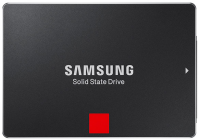 CDRLabs kicks off the week with a review of Samsung's 256GB 850 PRO SSD. First unveiled at the 2014 Samsung SSD Global Summit in Seoul, the 850 PRO is ideal for use in high-end PCs and workstations. The drive is powered by Samsung's own 3-core MEX controller and is available with up to 1TB of their second generation, 32-layer 3D V-NAND flash. The 850 PRO also supports Device Sleep (DEVSLP) for lower power consumption as well as self-encrypting drive (SED) technology that is TCG Opal 2.0 and IEEE-1667 compliant. To top it all off, it supports Samsung's RAPID (Real-time Accelerated Processing of I/O Data) technology. By using free PC memory as a cache, RAPID can push the performance of the SSD beyond the limits of the current SATA specification.