

WD Announces My Passport Slim Portable Hard Drives
WD, a Western Digital company, today announced the availability of its My Passport Slim line of portable hard drives, the first thin drives to offer up to 2 TB capacity, a metal enclosure, and 256-bit hardware-based encryption. The included WD SmartWare Pro data protection software allows users to back up their data to their My Passport Slim and keep an extra copy in their Dropbox account for peace-of-mind. The software also lets users back up their Dropbox account to the My Passport Slim. These features make the My Passport Slim an ideal choice for protecting, storing, and enjoying digital content on the go.
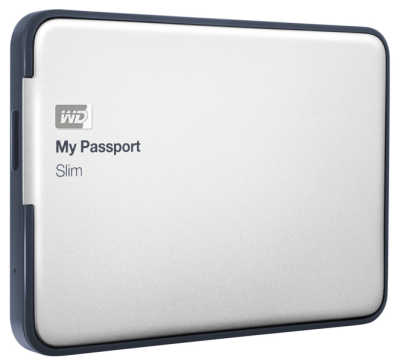
Available in 1 TB and 2 TB capacities, the My Passport Slim measures a scant 4.33 x 3.14 x 0.48-inches, giving mobile consumers an easy and convenient way to transport their favorite music, movies, photos and documents. The My Passport Slim also incorporates super-fast USB 3.0 connectivity for quick transfer speeds of high resolution digital files.
 Patriot, a global pioneer in high-performance memory, NAND flash, storage, and mobile accessories today announces the addition of 3 new 128GB USB 3.0 drives to its Supersonic family, the Supersonic RAGE XT 128GB, Supersonic Boost XT 128GB, and Supersonic Pulse 128GB. With this launch Patriot’s Supersonic brand family becomes the largest line up of performance 128GB USB 3.0 drives currently available.
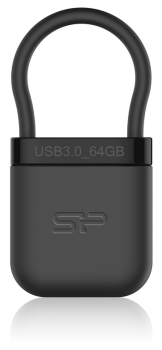 Silicon Power, the world’s leading provider of memory storage solutions launches the two latest designed USB flash drives – USB 2.0 Unique 510 and USB 3.0 Jewel J05. Characterized by exquisite lock-shape and vivid colors, Unique 510 and Jewel J05 show the sweetie- style which enables girls to display their fabulous and lovely look. Unique 510 and Jewel J05 are not only ordinary flash drives but trendy fashion accessories that are the perfect matches to bags, purses, or key rings.
 WD, a Western Digital company and storage industry leader, today announced the expansion of its category-leading WD Red line of SATA hard drives specifically designed for home and small office NAS (network attached storage) systems with one- to five-drive bays. WD Red hard drives are now available in a 2.5-inch form factor offering 1 TB and 750 GB capacities and a new 3.5-inch 4 TB capacity. Powered by NASware 2.0 technology, WD Red is compatibility-tested with top NAS system manufacturers and optimized for performance and reduced power consumption.

