

Silicon Power Introduces Slim S50 SSD
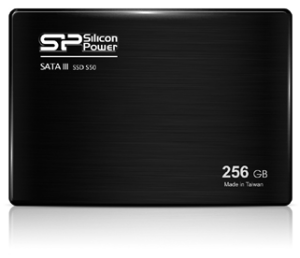 Silicon Power, the world’s leading provider of memory storage solutions today unveils a new addition of its Slim series 7mm 2.5” SSD. The Slim S50 features the latest controller technology to provide a brand new experience in excellent performance and cost effectiveness for computer enthusiasts.
To deliver enhanced performance stability, S50 is equipped with an all new controller that is unlike any other solutions in the market. Coupled with the latest firmware and advanced controller circuit design, the S50 enables stable IOPS performance under extended period.
The new Slim S50 provides remarkable performance with the SATA III 6Gbps interface. Its read and write speeds are twice the speed under the SATA II interface and over four times faster than that of a traditional hard drive. Featuring advanced high speed NAND flash, S50 delivers high data transfer rate up to 530MB/s in read speed and 200MB/s in write speed.

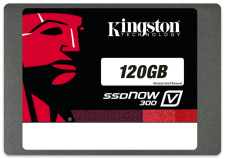 CDRLabs has taken an in depth look at Kingston's new SSDNow V300 solid state drive. Designed for cost-conscious consumers looking to upgrade their existing desktop or notebook PC, the V300 is 10x faster than a 7200RPM hard-disk drive. It is powered by an LSI SandForce Flash Storage Processor (FSP) solution customized for Kingston, and optimized for industry-leading 19nm NAND flash memory to deliver sequential read and write speeds of up to 450MB/s.
 HGST today announced the industry's highest-capacity 10,000 RPM, enterprise-class hard drive – the Ultrastar C10K1200. Providing a capacity extension to HGST's proven Ultrastar C10K900 product line, the new 2.5-inch Ultrastar C10K1200 features a SAS 6Gb/s interface for reliable data throughput, a 64MB cache buffer for optimized read/write response time, and a fast 10K rotational speed for reliable high-performance computing. All this, combined with the drive's low power, high capacity and high performance attributes, results in higher density servers, blades and network storage arrays that helps reduce space requirements, lowers cooling costs and improves total cost of ownership (TCO).

