
Toshiba Launches First Self-Encrypting Hard Drives With Wipe Technology
Toshiba Corporation today announced the launch of the world's first series of Self-Encrypting Drives (SED) equipped with Wipe Technology, Toshiba's proprietary suite of security functions that bring an unsurpassed level of data protection to IT equipment. Wipe Technology allows users to determine a range of security settings, including invalidation of encryption keys and data invalidation when a drive is removed from its housing or connected to an unauthorized host system.
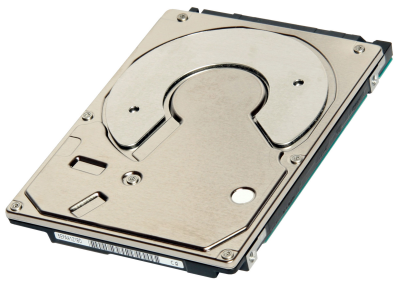
The five models in the 2.5-type MK6461GSYG family range from 160 gigabytes (GB) to 640GB and are designed for use in copiers, printers, POS systems, PCs and other IT devices. Sampling will start from the end of April with mass production following at the end of June.
IT departments must contend with various security risks, from lost and stolen PC through to compliance with increasingly strict privacy laws and regulations governing data security. These concerns also go beyond PCs. Today, most office copier and printing systems utilize HDD capacity and performance to support productivity and the security of recorded document image data that must be maintained. Furthermore, data invalidation required overwriting for hours or physically disrupting until now.
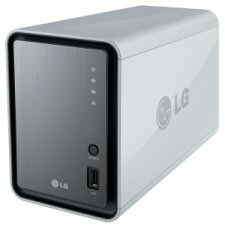 Today, CDRLabs brings you a review of LG's new two-bay network storage device, the N2A2. While lacking a built in DVD or Blu-ray writer, this consumer oriented NAS makes up for it by offering 2TB of storage, a versatile RAID system and a long list of features including USB device backup, Apple Time Machine support, Torrent file sharing and a built in DLNA media server.
 The USB Implementers Forum (USB-IF) today announced the first certified SuperSpeed USB (USB 3.0) chipsets. The A75 and A70M FCH chipsets from AMD represent a major milestone for broad SuperSpeed USB adoption among manufacturers, as built-in USB 3.0 support enables designers to seamlessly incorporate SuperSpeed USB into their systems. Certification of AMD A75 and A70M FCH chipsets provides assurance to manufacturers and consumers that the SuperSpeed USB chipsets are interoperable and comply with the USB 3.0 specification.