

- Details
- Flash Memory
Transcend Information, Inc. (Transcend), a leading manufacturer of storage and multimedia products, is proud to launch its comprehensive USB Type-C product line-up. With the growing adoption of the USB Type-C standard by new platforms and devices, Transcend has developed a wide range of USB Type-C products including USB flash drives, external hard drives, and card readers. These devices enable easy and efficient file transfer between the latest USB Type-C mobile devices and computers.

JetFlash 850S and JetFlash 890S USB Flash Drives: Superspeed, Lightweight Design and Dual Connector Model
Equipped with the latest USB 3.1 Type-C connector with USB OTG (On-The-Go) technology, Transcend’s JetFlash 850S flash drive delivers transfer speeds of up to 130MB/s. The JetDrive 850S also features an ergonomic curved grip and a lightweight design. In addition, Transcend’s JetFlash 890S is an OTG flash drive featuring dual connectors - a reversible USB Type-C connector and a standard USB 3.1 (Gen 1) Type-A connector - that is designed to transfer and back up files between the latest USB Type-C port equipped devices. Both USB flash drives use innovative COB (Chip on Board) technology and are assembled with a metallic casing, providing great dust and splash resistance.
- Details
- Flash Memory
VIA Technologies, Inc, today announced that it be will demonstrating its latest VIA NVMe PCIe Gen III & SATA III SSD controllers in Booth#818 of the 2016 Flash Memory Summit being held from August 9th to 11th in the Santa Clara Convention Center, California, USA.

Featuring the VIA LDPC PLUS ECC decoding engine with Gear-Shifting technology, the second generation VIA SSD controllers offer best-in-class error correction capability and ensure high-throughput performance without overheating issues.
“VIA Gear-Shifting technology leverages our unique dual hardware decoding architecture to maximize data integrity and longevity,” said Richard Brown, VP International Marketing, VIA Technologies, Inc. “Our second generation VIA SSD controllers are the ideal choice for computing devices that require superior SSD performance with high cost-efficiency.”
Add a comment- Details
- Flash Memory
 Marvell, a world leader in storage, cloud infrastructure, Internet of Things (IoT), connectivity and multimedia semiconductor solutions, today announced the expansion of its solid-state drive (SSD) portfolio to include the 88NV1160 Non-Volatile Memory (NVM) Express DRAM-less SSD controller. Marvell’s 88NV1160 DRAM-less SSD controller provides the industry’s leading performance per Watt and up to 1600MB/s read speeds. The 88NV1160 can be used in a single ball grid array (BGA) package SSD, as well as in a standalone controller in a tiny 9x10mm package which makes it compatible with M.2230 and M.2242 form factors. These features make the 88NV1160 optimized for a new generation of slim computing devices such as productivity tablets and ultrabooks. The new controller is currently available for sampling to key customers globally.
“As the world’s leading storage controller provider, Marvell has a long track record of bringing to market world-class innovations, including the pioneering integration of Host Memory Buffer technology into DRAM-less products. Working closely with other ecosystem leaders, Marvell has continued to advance the industry and drive a new generation of low power, small form factor mobile computing systems,” said Dr. David Chen, Vice President of SSD Business at Marvell Semiconductor, Inc. “The 88NV1160 controller is optimally engineered for high performance tablets and ultrabooks, providing unparalleled performance per Watt and the largest NAND compatibility on the market.”
Add a comment- Details
- Flash Memory
Samsung Electronics Co., Ltd., the world leader in advanced memory technology, today introduced a blueprint for next-generation flash memory solutions that will meet the ever-increasing demands of big data networks, cloud computing and real-time analysis.
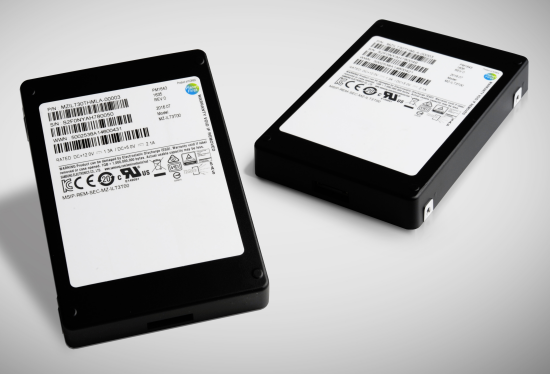
At Flash Memory Summit 2016, held in the Santa Clara (CA) Convention Center, Samsung showcased its 4th generation Vertical NAND (V-NAND) and a line-up of high-performance, high-capacity solid state drives (SSDs) available for its enterprise customers as well as Z-SSD, a new solution providing breakthrough performance for flash-based storage.
Samsung’s new flash storage devices are expected to contribute significantly to the global IT industry in meeting the growing storage requirements of today’s enterprise computing environment. These solutions will accommodate enormous amounts of data, and extremely high-speed information processing, while enhancing the total cost of ownership (TCO) for data centers.
Add a comment- Details
- Flash Memory
Micron Technology, Inc., today introduced the company's first 3D NAND memory technology optimized for mobile devices and its first products based on the Universal Flash Storage (UFS) 2.1 standard. Micron's initial mobile 3D NAND-based 32GB solution is targeted specifically for the high and mid-end smartphone segments which make up approximately 50 percent of worldwide smartphone volume. As mobile devices bypass personal computers as consumers' primary computing device, user behaviors heavily impact the device's mobile memory and storage requirements. Micron's mobile 3D NAND addresses these concerns, enabling an unparalleled user experience that includes seamless high definition video streaming, higher bandwidth gameplay, faster boot up times, camera performance and file loading.
"Micron continues to advance NAND technology with our introduction of 3D NAND and UFS products for the mobile segment," said Mike Rayfield, vice president of Micron's mobile business unit. "The improved performance, higher capacity and enhanced reliability of 3D NAND will help our customers meet the ever-growing demand for mobile storage and will enable much more exciting end user experiences."
To meet the elevated hardware demands stemming from increased mobile video and multimedia consumption, as well as the anticipated increased storage demands that will result from the introduction of 5G wireless networks, Micron 3D NAND technology stacks layers of data storage cells vertically with extraordinary precision to create storage solutions with three times more capacity than previous generation planar NAND technologies. Because capacity is achieved by stacking cells vertically, Micron is able to pack more storage cells into a much smaller die area, resulting in the delivery of the industry's smallest 3D NAND memory die measuring only 60.217mm2. A smaller die enables a tiny memory packaging footprint which can free up space for additional mobile battery size or enable smaller form factor devices.
Add a comment

