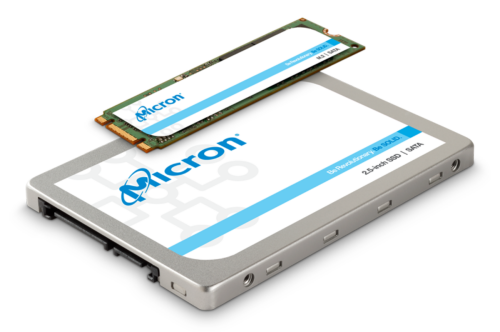

Micron Introduces 2200 PCIe NVMe SSD
Micron Technology, Inc., today announced a new solid-state drive (SSD) portfolio featuring support for the NVM Express (NVMe) protocol, bringing increased bandwidth and reduced latency to client computing markets. The Micron 2200 PCIe NVMe SSD is a vertically integrated solution — including 3D TLC NAND, internally designed ASIC drive controller and firmware in an M.2 form factor. This solution allows Micron to address growing needs across original equipment manufacturers (OEMs) and broader client markets for NVMe storage class drives.
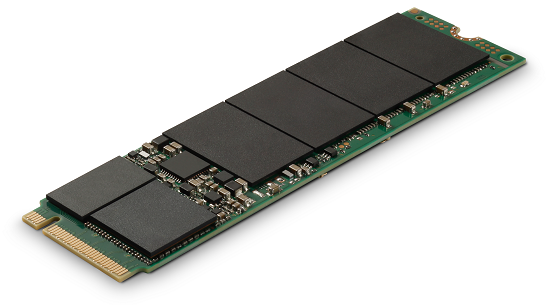
Users want to enhance their computing experience through improved responsiveness for instant access to files and media, higher capacity to store rich content, longer battery life and sleek form factors in their favorite compute devices. NVMe SSDs address these needs better than rotating media technology does, while offering increased reliability and performance.
Add a comment

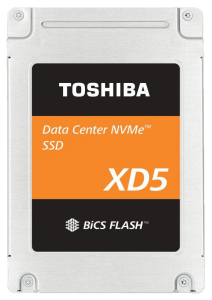 Toshiba Memory America, Inc., the U.S.-based subsidiary of Toshiba Memory Corporation, announced availability of its XD5 Series NVMe SSD platform in a 2.5-inch, 7mm low-profile form factor that is optimized for low-latency and performance consistency in read-intensive workloads. Developed for both data center and cloud environments, the new 2.5-inch form factor XD5 Series is ideal for NoSQL databases, large-scale-out data mining and analysis, and streaming applications. The XD5 Series is also well-suited for Open Compute Project (OCP) applications and systems.
 CDRLabs has taken an in depth look at Western Digital's latest NVMe SSD, the WD Black SN750. Designed to give hardcore gamers the competitive edge they desire, this single-sided M.2 form factor drive is powered by Western Digital's own Spectrum controller and is available with up to 2TB of the company's 64-layer BiCS 3D TLC NAND flash. The WD Black SN750 is also available with or without an EKWB-designed heatsink and is equipped with an ultra-fast PCIe Gen3 x4 NVMe 1.3 interface to deliver speeds that are more than six times faster than your average SATA 6Gb/s SSD.