

Thecus Announces World’s First Windows Storage Server 2012 R2 Essentials NAS
Thecus Technology Corp. today announces another world first: Windows Storage Server 2012 R2 Essentials is now available for NAS users. Available this October, the 2-bay W2000, 4-bay W4000, and the 5-bay W5000 offer a host of benefits to SMB users, including data protection, integrated cloud services, and secure remote access.
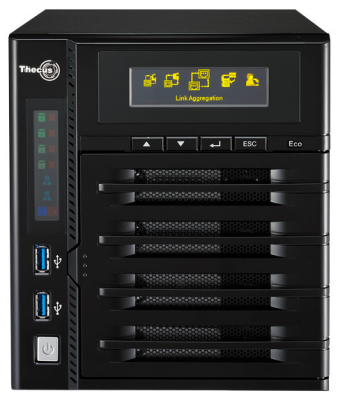
“Thecus NAS provide users with a complete solution to their storage needs. With the additions to the W Series, Thecus is able to offer a more diversified product to its customers. Windows Storage Server 2012 R2 Essentials is an ideal pairing with Thecus NAS and will equip small businesses with a powerful and trusted storage solution.” – Florence Shih, CEO at Thecus Technology Corp.
 Silicon Power, the world’s leading provider of memory storage solutions, today unveils the latest collection of metallic USB 3.0 flash drive—Jewel J80. Inheriting from the Northern Europe design concept of Firma F80, Jewel J80 embraces the post – modernism style and sophisticated metal-casing craftsmanship. While the incredible design of Firma F80 has won great recognitions from international design awards, such as reddot design award 2013, Jewel J80 makes it more perfect with the use of SuperSpeed USB 3.0 interface that realizes the wonderful combination of style and capability. Featuring a sleek unibody with ergonomic design, Jewel J80 presents the one-of-a-kind storage solution for fashion- and also function-conscious users.
 Millenniata and Verbatim today announced a global M-Disc partnership that Millenniata's Chief Executive described as "deep and wide-ranging."
 Lexar, a leading global brand of flash memory products, today announced the new 128GB Lexar High-Performance microSDXC UHS-I card with read transfer speeds up to 633x (95MB per second). Designed for sports camcorders, tablets and smartphones, the Class 10 microSDXC card can capture up to 15 hours of HD video.
 Lexar, a leading global brand of flash memory products, today announced the Lexar JumpDrive M20 Mobile USB 3.0 flash drive. Featuring two connectors – micro-USB and USB 3.0 – the new drive allows users to easily transfer playlists, photos, videos, and files with On-The-Go (OTG)-enabled Android tablets or smartphones without the use of cables or Wi-Fi.
 Today, CDRLabs brings you a review of SanDisk's new Extreme PRO solid state drive. Designed with gamers, enthusiasts and media professionals in mind, this high-performance SSD is powered by Marvell's 88SS9187 "Monet" controller and is equipped with SanDisk's new 1Ynm eX2 ABL MLC Toggle NAND flash to deliver up to 550 MB/s sequential read and 520 MB/s sequential write speeds. The Extreme PRO also features a tiered caching system which combines a sizeable DRAM cache with the latest developments in SanDisk's nCache Pro technology. To deliver consistent high performance, nCache Pro uses a large non-volatile SLC cache to accumulate small writes at high speed and then flushes them to the larger MLC sections of the NAND flash memory array.

