

Western Digital Introduces WD Blue And WD Green Solid State Drives
Western Digital Corporation (“Western Digital”) today announced WD Blue and WD Green solid state drives (SSDs), the first WD-branded SATA client SSDs. The new SSDs complement the company’s industry leading family of hard drives for PCs and workstations, providing a full portfolio of WD storage devices for virtually any application.
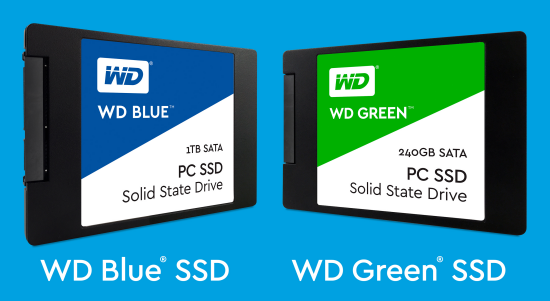
The ultimate solution for building DIY PCs, extending the life of current PCs or upgrading existing storage, the WD Blue and WD Green SSDs boast near-maximum speed of SATA drives, best-in-class endurance and MTTF and WD Functional Integrity Testing (F.I.T.) Lab certification, resulting in quick boot times and increased program responsiveness. Consumers benefit from the combination of reliable storage with an industry-leading 1.75M hours MTTF, coupled with reduced power and less heat when compared to HDDs. Both include free, downloadable, WD SSD Dashboard software, which allows continuous performance and capacity monitoring. For consumers who are looking for instant-on responsiveness, durability, low power consumption, and ultra-thin, ultramobile form factors, the WD Blue and WD Green SSDs are the perfect options.
Add a comment
 Launching today is the latest version of Nero 2017, the successful multimedia software for burning, copying, creating, editing, ripping, converting, playing and streaming media content.
 Today, CDRLabs brings you a review of Crucial's new MX300 M.2 SSD. Designed for tablets and ultrabooks, this new addition to the MX300 line isn't much larger than a stick of gum. The drive is powered by Marvell's 88SS1074B1 controller and is available with up to 1050GB of Micron's 3D TLC NAND. The MX300 M.2 also shares many of the same features as its full size counterpart. In addition to Crucial's Dynamic Write Acceleration technology, it offers AES 256-bit encryption, thermal and power loss protection, TRIM support and active garbage collection. The MX300 M.2 also uses technologies like Data Defense and Redundant Array of Independent NAND (RAIN) to increase security and protection of data to a level that’s not typically found in consumer-class SSDs.


